Alternatives to Knee Replacement Surgery in Leawood

Knee replacement isn’t the only way to address knee pain. Alternatives to knee replacement surgery in Leawood may include physical therapy, low-impact exercise, injections, braces, or shoe inserts, depending on what is causing your symptoms. These options may ease discomfort, improve movement, and sometimes delay surgery.
It’s understandable to explore non-surgical options before deciding about a major procedure. This article explains how strengthening exercises, activity changes, injections, and other approaches may fit into care, and why your symptoms, medical history, and goals matter. A personalized evaluation can help clarify whether your pain comes from the knee or another source, and when surgery may be worth discussing.
Table of Contents
1. Physical therapy and exercise
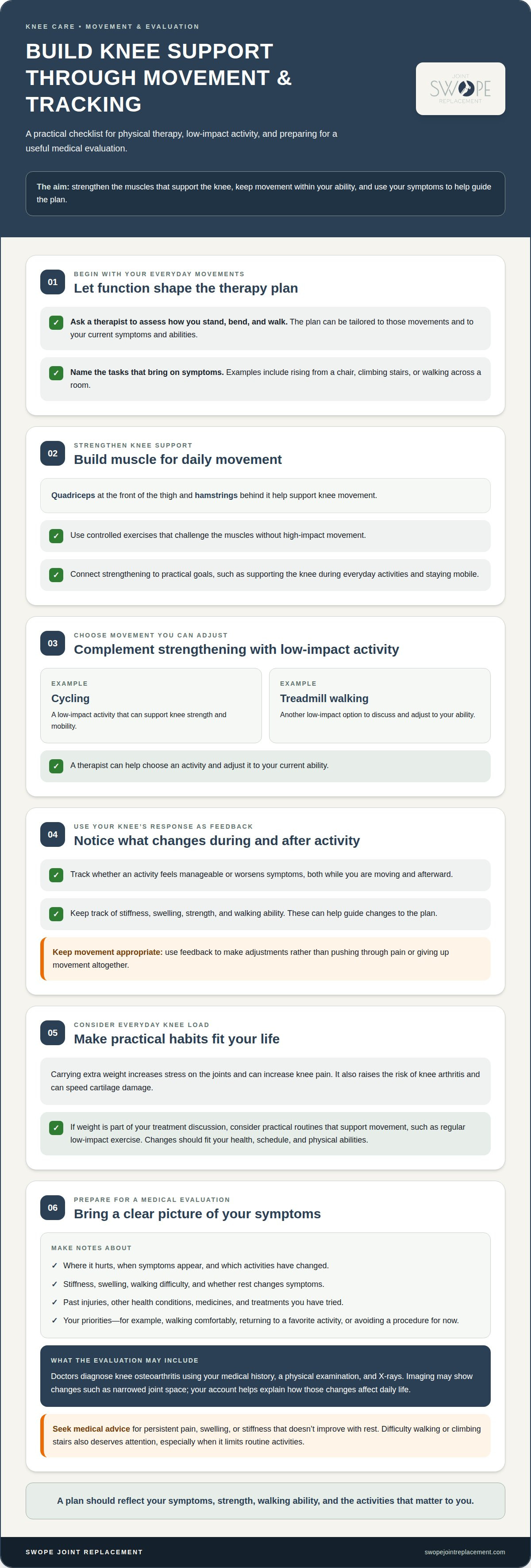
Physical therapy can help ease pain by strengthening the muscles that support the knee. A therapist can assess how you stand, bend, and walk, then tailor exercises to those movements. For example, difficulty rising from a chair may call for practice strengthening the muscles used in that task. The practical goal is to support the knee during everyday activities.
The quadriceps at the front of the thigh and hamstrings behind it help support knee movement. Strengthening these muscles may ease pain and make it easier to stay mobile. A physical therapy plan may use controlled exercises that challenge the muscles without high-impact movement. Tell your therapist which tasks bring on symptoms, such as climbing stairs, standing from a chair, or walking across a room.
Low-impact activity can complement strengthening. Cycling and walking on a treadmill are examples that can support knee strength and mobility. A therapist can help choose an activity and adjust it to your current ability. Notice how your knee responds during and after exercise. That feedback can guide changes, rather than pushing through pain or giving up movement altogether.
Everyday habits also affect the load placed on your knees. Carrying extra weight increases stress on the joints and can increase knee pain. It also raises the risk of knee arthritis and can speed cartilage damage. If weight is part of your treatment discussion, consider practical routines that support movement, such as regular low-impact exercise. Changes should fit your health, schedule, and physical abilities.
Starting treatment early may ease discomfort and help keep the knee active, but not every exercise suits everyone. Stiffness, swelling, strength, and walking ability all affect which movements are appropriate. Track which activities feel manageable and which worsen symptoms. Sharing those details in therapy gives the plan a clear starting point and helps measure changes in everyday function.
Rehabilitation is also important if knee replacement becomes part of your care. After total knee replacement, rehabilitation begins immediately, and a physical therapist teaches exercises to strengthen the leg and restore knee movement. Patients may initially walk with crutches or a walker. Recovery takes months, so rehabilitation is a structured part of surgical care, not a treatment alternative before surgery.
A continuous passive motion machine is another rehabilitation tool. It moves the knee through a controlled range while you rest. Unlike active strengthening, the machine guides movement without requiring you to contract your muscles. Physical therapy and exercise focus on active function, such as walking, bending, and building muscle support. Knowing the difference can help you discuss which approach fits your plan.
Evaluating symptoms, medical history, and goals
Knee pain needs context before treatment choices can be compared. Note where it hurts, when symptoms appear, and which activities have changed. For example, record whether stiffness affects your first steps or climbing stairs. Include swelling, walking difficulty, and whether rest changes the symptoms. Knee osteoarthritis often develops in people in their 50s, but underlying conditions or genetic predisposition can lead to diagnosis in the 40s. Your age alone doesn’t determine the treatment plan.
A medical evaluation brings your history and examination together. Doctors diagnose knee osteoarthritis using medical history, a physical examination, and X-rays. Imaging may show changes such as narrowed joint space, while your account helps explain how those changes affect daily life. Share past injuries, other health conditions, medicines, and treatments you have tried. Describe your priorities too, such as walking comfortably, returning to a favorite activity, or avoiding a procedure for now.
Over-the-counter medicines aren’t suitable for everyone. Nonsteroidal anti-inflammatory drugs, or NSAIDs, include naproxen and ibuprofen. They can have side effects, may raise blood pressure, and some have been linked in larger studies with a small increase in heart-attack risk. Discuss your health history and other medicines with a doctor before using them. For knee osteoarthritis, the American Association of Hip and Knee Surgeons advises against opioids except in very rare cases. Pain relief should suit the cause of your symptoms and your overall health.
Joint-preserving treatments depend on cartilage damage, alignment, and the location of the problem. Cartilage-regeneration procedures may suit knees with limited arthritis and good bone alignment, rather than damage across the entire joint. Autologous chondrocyte implantation involves taking cartilage cells, growing them in a lab, and surgically replanting them. Young people and athletes with cartilage loss may be candidates. Platelet-rich plasma, prepared from a patient’s blood, and concentrated bone marrow injections are also discussed as regenerative options. Research supporting these injections is less established than evidence for cortisone and hyaluronic acid.
Arrange medical advice for persistent pain, swelling, or stiffness that doesn’t improve with rest. Difficulty walking or climbing stairs also deserves attention, especially when it limits routine activities. Bring your symptom notes and medication list to the visit. A focused orthopaedic evaluation can help clarify whether the knee joint, another condition, or a combination of factors is driving your symptoms.
3. What Are the Alternatives to Knee Replacement Surgery?
The right option depends partly on how much arthritis affects the knee and which activities remain possible. Osteoarthritis gradually wears away joint cartilage, but the pattern and extent of damage vary. With limited arthritis, treatment may focus on easing symptoms, supporting movement, or preserving remaining cartilage. More extensive damage can narrow those choices. A treatment plan should connect the severity of the condition with your pain, swelling, and everyday function.
Risks and recovery times vary by treatment. Nerve ablation can lose effect as sensory nerves grow back in six months to two years, and pain may return. Exercise-based care builds function through activity, while arthroscopy uses small cuts and a camera. Neither has one recovery timetable that fits everyone.
For symptoms during walking or exercise, a knee brace or shoe inserts may help stabilize the joint and ease discomfort. These supports don’t restore worn cartilage; they change how the knee is supported during movement. Physical therapy can also combine guided exercise with adjustments to daily activities. Together, these approaches focus on function without removing or replacing the joint surfaces.
Other treatments target pain signals or inflammation. Radiofrequency ablation treats sensory nerves around the knee, while genicular artery embolization targets small arteries that feed inflamed areas. The aim of embolization is to reduce pain and swelling and improve mobility. Neither approach rebuilds the knee joint. Nerves may grow back after ablation, which is one reason pain relief can change over time.
Arthroscopic knee surgery uses small incisions and a camera to reach the joint. A surgeon can remove loose cartilage fragments, smooth joint surfaces, or repair tears. This approach addresses a specific problem inside the knee; it is not the same as replacing worn joint surfaces. The decision depends on whether a treatable finding, such as a tear or loose fragment, matches your symptoms.
Cartilage-focused procedures suit a narrower group than general symptom management. Cartilage-regeneration treatments may be considered when arthritis is limited and bone alignment is good, rather than replacing the whole joint. The amount and location of cartilage damage matter. With severe, widespread osteoarthritis, preserving a small area of cartilage may not address the broader source of pain.
Non-surgical care may reduce pain and swelling, improve motion and function, and delay or prevent replacement. Compare each option with your main limitation: pain at rest, difficulty walking, reduced motion, or a specific mechanical problem. If symptoms continue despite non-surgical treatment, knee replacement may enter the discussion. The choice depends on the condition being treated and the function you hope to regain.
4. Corticosteroid and hyaluronic acid injections
Knee injections may offer temporary relief, often for a few months, and may help postpone surgery. Corticosteroid and hyaluronic acid injections work differently, so the choice depends on the symptoms being treated. Corticosteroids, including cortisone, may reduce arthritis-related swelling. Hyaluronic acid is intended to support synovial fluid and ease stiffness. Neither option replaces damaged joint surfaces. Discuss how symptom relief could support your mobility and daily activities.
A corticosteroid injection targets inflammation inside the knee. One injection may reduce knee pain for four to twelve weeks, while cortisone relief may last about three to six months before another injection is needed. These are different reported durations, not a fixed schedule for every patient. The main purpose is symptom control. Less pain may make walking or physical therapy more manageable while you consider broader treatment goals.
Frequency matters with repeated corticosteroid injections. Most physicians limit these to three or four injections per year in the same joint. Discuss previous injections and how long the relief lasted. Note whether pain eased for weeks or months, and whether swelling or stiffness changed. This record helps frame the next decision around the actual benefit, rather than repeating a procedure without reviewing its effect.
Hyaluronic acid injections are another option for knee arthritis. Treatment typically involves one to three injections, spaced a week apart. Hyaluronic acid is described as helping restore synovial fluid and reduce stiffness. Some studies suggest pain relief may last three to six months. The number of visits and possible duration differ from corticosteroid treatment, so compare those details with your mobility needs and priorities.
Before choosing an injection, identify the problem you most want to address. Swelling and an inflammatory flare may call for a different discussion than persistent stiffness. Consider how symptoms affect walking, sleep, or exercise, and what relief would help you do more comfortably. Injections may reduce symptoms, but temporary improvement doesn’t establish that arthritis has resolved. Keep that distinction in mind when weighing continued non-surgical care against surgery.
Track the result after each procedure. Record the injection type, date, changes in pain, and how long those changes last. Note whether climbing stairs becomes easier or relief fades before your next appointment. Those details help assess whether another injection fits your goals. They also keep the decision focused on function, not just a short-term change in discomfort.
5. Evaluation and personalized treatment planning
A useful plan matches treatment to the source of pain, joint changes, and your goals. Knee pain can sometimes originate in the spine or hips, so the knee may not be the only focus. Describe where discomfort travels, what movements trigger it, and whether swelling changes during the day. Pain radiating from the back, for example, calls for a different assessment than pain centered around the knee.
Evaluation combines your symptoms with examination findings and imaging. X-rays of an arthritic knee typically show narrowing of the joint space. That finding helps describe cartilage loss, but symptoms and function matter too. Tell your doctor whether pain interrupts walking, limits bending, or makes standing difficult. Your priorities help shape the plan, whether you want to keep up with daily routines or return to a particular activity.
Conservative and surgical care address different needs. Non-operative options may reduce pain and inflammation, improve movement, or support function. A doctor may recommend surgery for knee osteoarthritis when non-surgical treatments haven’t relieved symptoms. The decision weighs joint damage alongside daily limitations and your response to prior care. Surgery isn’t the only measure of progress; moving more comfortably matters too.
Personalized planning also considers connected joints and alignment. When hip or pelvic alignment places stress on the knee, sacroiliac joint injections or fusion may help address that source. This illustrates why an evaluation should look beyond the painful spot. Treatment aimed only at the knee can miss a contributing problem elsewhere. Your medical history, examination, and imaging guide which factors deserve attention.
For patients in Leawood and the greater Kansas City area, including Overland Park, Olathe, Lee’s Summit, Lenexa, Leawood, Blue Springs, and Independence, Swope Joint Replacement provides non-operative orthopaedic care and evaluates knee arthritis. A focused assessment connects your symptoms, examination, imaging, and goals to a discussion of conservative and surgical options. Bring a list of medicines, previous treatments, and activities that have become difficult. Those details make the visit more specific and help explain the reasoning behind each option.
Use the evaluation to clarify what each treatment is intended to change. Ask how a proposed approach relates to your pain pattern, joint findings, and functional goals. If knee symptoms persist despite conservative care, discuss how surgical treatment compares with continued non-operative management. A careful plan explains the reasons for each step, rather than treating an X-ray or a single symptom as the whole story. To discuss non-operative knee treatment options, take the next step with an orthopaedic evaluation.
Swope Joint Replacement: Direct Anterior Hip Replacement
Swope Joint Replacement offers non-operative treatment options and knee replacement for patients whose arthritis remains limiting. A personalized orthopaedic discussion can help clarify whether continued conservative treatment or surgery better fits your symptoms, imaging, and daily goals. If knee replacement is appropriate, you can discuss the procedure and your questions directly with the practice.
Direct anterior hip replacement is a separate procedure for hip conditions, not an alternative to knee replacement. Swope Joint Replacement also offers revision knee replacement for people whose previous knee implant may need further surgical care. The right next step depends on which joint is causing your symptoms and what an evaluation shows. To discuss your knee concerns and treatment options, contact Swope Joint Replacement.
Take the Next Step With Clarity
Choosing among alternatives to knee replacement surgery in Leawood is a personal decision shaped by your symptoms, priorities, and willingness to consider surgery. You don’t need to settle every question before speaking with an orthopaedic specialist. Bring your concerns, the activities you hope to return to, and what you want to understand. That conversation can help you make a considered decision about your next step.
Swope Joint Replacement offers knee replacement when surgery is appropriate, along with Direct Anterior Hip Replacement and Revision Hip Replacement for their respective joint needs. Your care can begin with discussing what is affecting your movement and which treatment paths fit your situation. If you’re ready to talk through your knee concerns, contact Swope Joint Replacement.
With a clearer understanding of your options, you can move forward at a pace that feels right for you.
Frequently Asked Questions
What Are the Alternatives to Knee Replacement Surgery?
Options include physical therapy, low-impact exercise, braces, shoe inserts, injections, and selected procedures. For people exploring alternatives to knee replacement surgery in Leawood, the right choices depend on what is causing symptoms and how much arthritis affects the joint. A brace may support walking, while an injection may aim to reduce pain temporarily. A clinician can assess whether cartilage-preserving treatment is appropriate or whether joint damage makes other care more relevant.
What Can You Do Besides Surgery for Knee Pain?
Besides surgery, you can discuss a plan combining guided exercise, activity adjustments, supportive devices, and symptom-relief treatments. A practical first step is to note which activities trigger pain, such as standing from a chair or walking on uneven ground. Bring that information, your medication list, and details of prior treatment to an appointment. Those specifics help connect care to the movements you want to manage more comfortably.
What happens if non-surgical treatments do not relieve knee pain?
If symptoms continue despite non-surgical care, the next step is to reassess your diagnosis, imaging, and daily limitations. A doctor may discuss surgery when other treatments haven’t relieved osteoarthritis symptoms. That discussion should cover what the procedure is intended to improve and how it fits your goals. Persistent difficulty with routine tasks, such as getting in and out of a car, is useful context to share.
What non-surgical alternatives to knee replacement are available for knee osteoarthritis?
For patients considering alternatives to knee replacement surgery in Leawood, osteoarthritis options may include physical therapy, low-impact exercise, braces, shoe inserts, and corticosteroid or hyaluronic acid injections. Selected cases may involve radiofrequency ablation or cartilage-focused treatment. These approaches serve different purposes: a brace supports the knee, while an injection targets symptoms. Cartilage damage, alignment, and activities limited by pain help determine which options warrant discussion.
How effective are physical therapy and low-impact exercise for knee arthritis?
Physical therapy and exercise can strengthen the muscles that support the knee and help maintain mobility. Quadriceps and hamstring strengthening may make everyday movement easier, while cycling or treadmill walking offers low-impact activity. Judge progress by function: for example, whether standing from a chair or walking through a grocery store becomes more manageable. A therapist can adapt exercises to your symptoms and movement abilities.
Can weight loss, braces, or walking aids delay knee replacement?
Weight changes and supportive devices may reduce strain or discomfort, but they don’t repair damaged cartilage. Carrying extra weight increases stress on the knees, while braces and shoe inserts can support the joint during activity. Walking aids may help with stability or reduce loading during painful movement. Whether these measures postpone surgery depends on arthritis severity, symptom response, and which daily tasks remain difficult.
What knee injections are available, and how long do corticosteroid or hyaluronic acid injections work?
Corticosteroid and hyaluronic acid injections are used to address arthritis symptoms. A corticosteroid injection may ease pain for four to twelve weeks; reported cortisone relief can last about three to six months. Hyaluronic acid treatment typically uses one to three injections, spaced a week apart, and some studies suggest relief may last three to six months. These durations vary, so track symptom changes and their effect on daily activities.
Are PRP or stem cell injections proven and FDA-approved for knee arthritis?
Evidence for platelet-rich plasma and concentrated bone marrow or stem-cell injections is less established than evidence for cortisone and hyaluronic acid injections. PRP is prepared from a patient’s blood and may be used with the aim of easing pain or improving movement. “Stem cell injection” can refer to different preparations, so the name alone doesn’t establish effectiveness or FDA approval. Discuss the specific treatment and evidence with your orthopaedic clinician.



Comments