Cash Pay Orthopedic Care in Overland Park: Prices and Services

Cash-pay orthopedic care should make the financial conversation clearer, not force you into a one-size-fits-all price. A cash-pay orthopedic doctor in Overland Park can explain the care options and provide pricing after a quote request, with the details shaped by your condition and treatment needs.
It’s reasonable to understand your treatment choices and payment arrangements before making a decision. This article explains cash-pay orthopedic care, the conditions and treatments it may address, and how joint replacement and other procedures fit into care. It also covers what to consider when choosing an orthopedic provider in Overland Park and the greater Kansas City area.
Whether you’re considering non-operative treatment, injury care, or joint replacement, a clear understanding of your options can help you prepare for the next conversation.
Table of Contents
Clinic hours and contact information
Use the right location and service hours to plan an orthopedic visit in Overland Park. Walk-in care has set hours, seasonal sports access, and clear limits for emergencies.
Lenexa and Overland Park Locations
For an Overland Park orthopedic walk-in visit, the location is Overland Park Regional Medical Center, 10500 Quivira Rd, Overland Park, Kansas 66215. Patients traveling from Lenexa should use this address to plan their route and distinguish the Overland Park walk-in location from other orthopedic offices. The walk-in clinic treats acute orthopedic injuries in patients aged 5 years and older.
Contacting the Clinic
The Overland Park orthopedic walk-in clinic’s contact number is 913-588-6100, and the clinic fax number is 913-901-0186. Walk-in hours are Monday through Saturday, 8 a.m. to 7 p.m.; the clinic is closed on observed holidays. Patients are seen first come, first served, with no appointment needed.
An orthopedic evaluation can address acute injuries, but it is not a substitute for emergency care. Patients with open fractures, serious lacerations, or finger amputations should go directly to an emergency department. A clinician can assess the injury, determine what care may be appropriate, and discuss follow-up when needed.
In Kansas, referral requirements depend on the clinic’s intake process and the type of appointment. Don’t assume that every cash-pay orthopedic visit requires a referral or that none does; ask about the appointment pathway when arranging care.
The fall Saturday sports medicine walk-in clinic runs from Labor Day to Thanksgiving, from 8 to 11 a.m. It serves middle school, high school, and adult athletes. Sport-related concussions are treated only during those seasonal clinic hours, not during the orthopedic walk-in clinic’s other hours.
Self-pay X-ray, MRI, and other imaging costs vary with the imaging type, body area, and whether interpretation is included; the price depends on the case and is given after a quote request. Ask for an itemized estimate that separates imaging from the appointment and any follow-up care.
Payment arrangements vary by clinic. Swope Joint Replacement offers transparent cash pricing for office visits and in-office procedures. Its concierge orthopaedic care is out of network with all insurance carriers by design, so clarify the payment arrangement that applies to the care you are considering.
Bring identification, a medication list, and relevant medical history. If you have insurance information, bring it as well, particularly when discussing surgery. Even when paying directly, these details help the care team understand your health context. Consider possible follow-up costs, imaging, and treatment when reviewing the overall financial scope of care.
Orthopedic treatments and procedures
Orthopedic care addresses conditions involving bones, joints, and movement. Cash-pay describes how care is paid for, not which treatment is appropriate. The clinician’s evaluation and your needs help determine the options to discuss.
Swope Joint Replacement provides general orthopaedic care and non-operative treatment options for suitable concerns, as well as hip and knee replacement surgery. The plan depends on your condition and clinical assessment.
Musculoskeletal concerns involve structures that support movement, including bones and joints. An appointment may focus on a recent injury, ongoing discomfort, or difficulty moving comfortably. The assessment helps identify what needs attention and whether non-operative care may suit your needs.
Non-operative care means treatment without surgery. The approach should address the problem being evaluated, your symptoms, and your daily activity goals. Ask how a proposed option relates to your diagnosis, what follow-up it involves, and what changes would prompt another evaluation. This helps you understand the plan instead of treating “non-operative” as a single procedure.
Individualized treatment begins with the concern you bring to your appointment. The clinician considers your history, symptoms, examination findings, and relevant imaging. A recent injury and chronic discomfort may call for different evaluations, even when they affect the same joint. Your daily activities and priorities also help shape a practical plan.
Some orthopedic procedures involve arthroscopy, a technique that uses small incisions and a camera to examine or treat a joint. Overland Park Regional Medical Center describes arthroscopy as minimally invasive and usually performed on an outpatient basis. Whether a procedure is suitable depends on the joint problem and clinical assessment. It is distinct from non-operative care, so discuss its purpose and expected recovery with the treating clinician.
For a self-pay visit, discuss the evaluation and recommended next steps. Ask what condition is being assessed, which treatments may be appropriate, and whether follow-up or imaging is part of the plan. This helps you understand how each step relates to your needs without assuming every musculoskeletal concern requires surgery.
If your concern may be suited to care without surgery, explore non-operative orthopedic treatment options as part of your treatment discussion. Bring a clear account of when symptoms began and how they affect movement; those details help focus the evaluation and next-step conversation.
Understanding these details helps guide every stage of your care. At the orthopedic walk-in clinic, patients are treated on a first-come, first-served basis, and no appointment is needed. You can consider this option when seeking an orthopedic evaluation, while discussing your concern and possible next steps with the clinician.
Bone and joint conditions and injuries
Bone and joint problems can follow a fall, occur during sports, or develop as persistent discomfort. An orthopedic evaluation helps distinguish an acute injury from a chronic concern and identify which structures need attention. For example, pain after a sudden twist presents a different history from stiffness that has gradually affected everyday movement. Describe when symptoms began and what activities make them worse.
Acute injuries may include suspected fractures and other trauma affecting bones or joints. The Overland Park orthopedic walk-in clinic treats acute orthopedic injuries in patients aged 5 years and older. Its scope is specific: it does not treat chronic pain, wound care, or back and neck issues. Those distinctions help patients choose an appropriate care setting rather than expecting every orthopedic concern to fit walk-in care.
Some injuries need emergency attention instead of a routine orthopedic visit. Patients with open fractures, serious lacerations, or finger amputations should go directly to an emergency department. These examples involve a different level of urgency than a non-emergency injury assessment. If an injury is life- or limb-threatening, call 911 or go to the nearest emergency room.
Chronic pain calls for a different conversation from a recent injury. A long-standing problem may affect walking, gripping, or other daily tasks, while a sports injury may begin with a distinct event. Note the location, timing, and effect on movement. These details help the clinician understand your concern and discuss whether further assessment or treatment is appropriate.
Orthopedic care can address concerns involving bones, joints, and movement. The evaluation focuses on the affected area and reason for your visit. A suspected fracture after a fall, joint pain that interferes with routine activity, and a sports injury are different concerns, not interchangeable diagnoses. Depending on the findings, treatment may include non-operative options or surgery.
For a cash-pay orthopedic visit with a qualified cash pay orthopedic doctor overland park, clarify your main concern and the care being considered. Ask how the recommended next step relates to your injury or condition and whether follow-up is part of the plan. A treatment discussion can cover non-operative care and surgery where appropriate. The aim is to understand options for your specific concern, not assume every injury needs a procedure or every painful joint requires surgery.
Before choosing a care setting, consider whether the concern is a recent injury or a problem that has persisted, and whether it falls within the clinic’s stated scope. The walk-in service is for acute orthopedic injuries in patients aged 5 years and older; chronic pain, wound care, and back and neck issues are outside that scope. For a non-emergency concern, be ready to explain what happened, where discomfort is located, when it began, and how movement is affected. This gives the clinician context for considering an assessment or follow-up without presuming a particular diagnosis or treatment.
Swope Joint Replacement advises that patients with life- or limb-threatening injuries call 911 or go to the nearest emergency room. In those circumstances, emergency care takes priority over a walk-in orthopedic evaluation. For other injuries, the key distinction is whether the concern is acute and within the clinic’s scope, rather than a chronic or excluded issue.
Joint replacement surgery
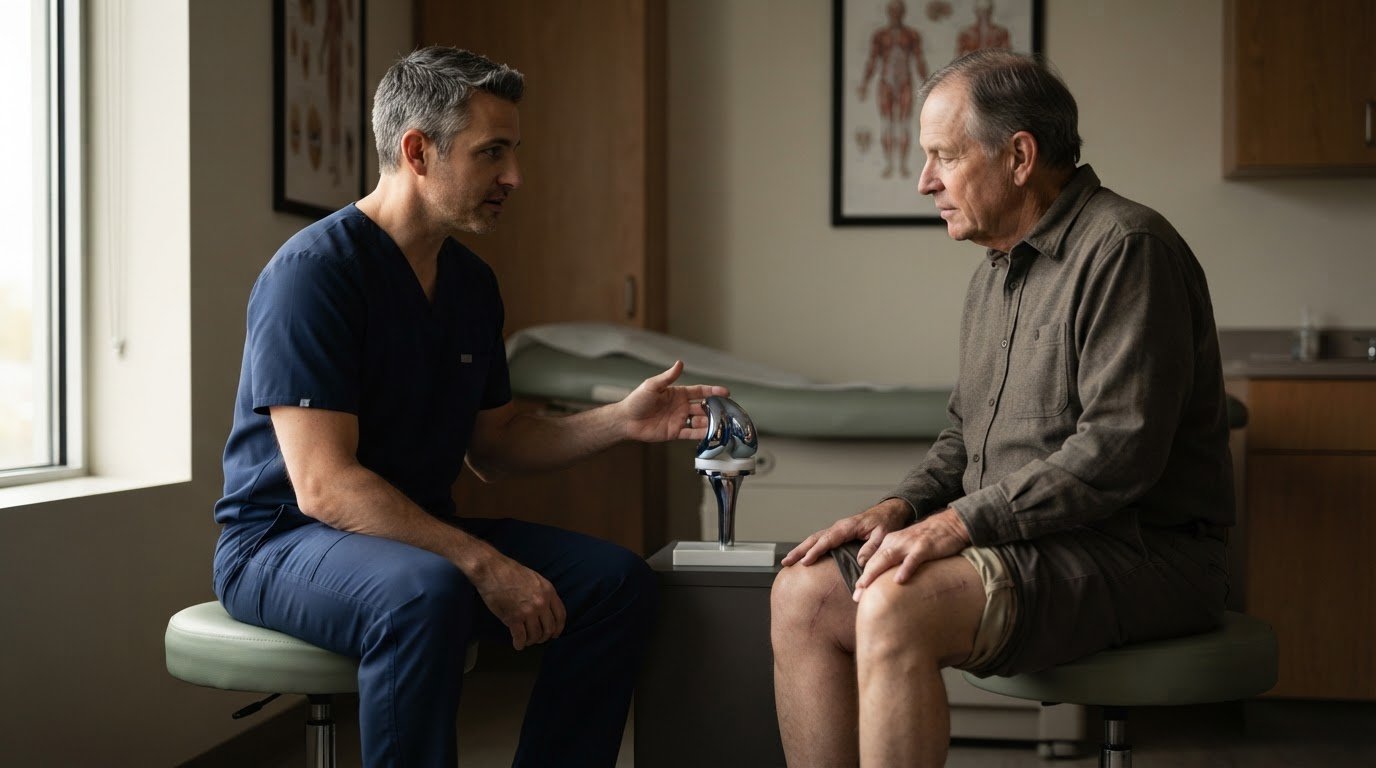
Hip and knee replacement are surgical options for selected joint problems. The decision depends on your symptoms, examination, relevant imaging, and treatment goals. A consultation should explain the problem being addressed and why surgery is being considered, while making space to discuss non-operative care when it better fits your needs.
Hip replacement approaches can differ. Direct anterior hip replacement accesses the hip joint from the front. Your surgeon can explain how this approach relates to your anatomy, diagnosis, and surgical plan. Ask what the procedure is intended to address, which alternatives are relevant, and what recovery planning may involve.
Knee replacement is another option for a joint requiring surgical treatment. The discussion should connect your symptoms and evaluation findings with the proposed procedure. Ask about the goals of surgery, the care plan around the procedure, and follow-up. Clear answers help you weigh the practical demands of treatment and its potential role in your care.
Revision surgery differs from an initial replacement. Revision hip or knee procedures address complex concerns related to a previous joint replacement. The surgeon considers the history of the earlier procedure and your current joint concern. Bring previous operative records or imaging if available so the discussion can account for your medical history.
Recovery planning deserves attention before surgery. Ask which activities may need to change, what follow-up appointments are planned, and how progress will be assessed. Your health, home routines, support, and procedure all shape planning. A careful discussion makes expectations clearer without promising a particular recovery timeline or result.
Fractures and joint replacement present different treatment questions. A fracture is an injury, while replacement surgery reconstructs a joint. Trauma and fracture care should therefore be considered separately from planned hip or knee replacement. For patients considering care in Overland Park or the greater Kansas City area, identifying the concern helps guide the clinical conversation.
For cash-pay joint replacement, price depends on the case and is given after a quote request; the procedure, care needs, and related treatment components shape the estimate. Ask what the quote covers and which follow-up services are included. A clear written breakdown helps you understand the planned care and its financial scope before making a decision.
Before proceeding, make sure you understand the diagnosis, proposed procedure, alternatives, and recovery planning. Ask how follow-up fits into the treatment plan. These points apply whether you are discussing direct anterior hip replacement, knee replacement, or revision surgery. The decision should reflect your clinical needs and personal priorities.
Physicians and providers
The clinician you see can depend on the type of orthopedic visit. At the Overland Park orthopedic walk-in clinic, patients are seen by an advanced practice provider. Follow-up appointments are scheduled as needed with orthopedic and/or sports medicine physicians and surgeons. This pathway separates the initial injury assessment from specialist follow-up when further care is appropriate.
An advanced practice provider can assess an acute orthopedic concern and help determine the next step. For example, a patient with a sprain may need an initial evaluation, while persistent symptoms may call for follow-up with an orthopedic or sports medicine physician. The appropriate route depends on the concern and the assessment, rather than the title alone.
Provider roles also differ by the care being considered. A physician or surgeon may discuss a diagnosis, treatment options, or a procedure when the visit calls for that expertise. For a sports injury, sports medicine follow-up may be scheduled as needed. Ask who will conduct each appointment and how information from the initial assessment will guide follow-up.
Payment arrangements are separate from the clinical questions you bring to a visit. Swope Joint Replacement is out of network with all insurance carriers by design, so the practice can place patient care first. Office visits and in-office procedures have transparent cash pricing. Ask your insurer how surgery at a hospital or accredited surgical center would be billed and what cost-sharing may apply.
Prepare a concise account of the problem before your appointment. Note when the pain or injury began, which movements aggravate it, and how it affects daily activities. For a sports sprain, describe what happened and where symptoms are located. Bring relevant imaging or previous records if available; they can help the physician understand your care history.
Useful questions focus on decisions and continuity. Ask what the assessment suggests, which treatment options are relevant, and whether a follow-up with an orthopedic or sports medicine physician is needed. If surgery is discussed, clarify which surgeon would be involved and what the next clinical step entails. These questions keep the conversation centered on your diagnosis and care plan.
Choosing a cash-pay orthopedic doctor in Overland Park means understanding both the provider pathway and the payment arrangement. Direct payment does not replace the need to clarify who evaluates you, who handles follow-up, and how your insurance may apply. A clear explanation helps you make an informed decision without confusing an initial assessment with specialist or surgical care.
If you’re considering care with out-of-network insurance, review out-of-network insurance options alongside the provider and follow-up plan. Match the payment route to the care you’re seeking, whether that’s an injury evaluation or a specialist discussion.
Swope Joint Replacement: Cash pricing
Swope Joint Replacement offers transparent cash pricing for office visits and in-office procedures, alongside care for patients considering direct anterior hip replacement, knee replacement, or revision surgery. This may suit you if you are weighing joint surgery and want to discuss treatment and payment together.
Pricing depends on the case and is provided after a quote request; the procedure, care needs, and related treatment components shape the estimate. A clear quote helps you understand the financial scope of the proposed care before deciding how to proceed. You can discuss the treatment under consideration and how cash pricing applies to your situation.
If you’re exploring joint replacement or revision surgery in Overland Park, contact Swope Joint Replacement to discuss your care and cash-pricing questions.
Take the Next Step With Clarity
Choosing a cash-pay orthopedic doctor in Overland Park is a personal decision. Start by identifying what matters most: a careful explanation of your options, clear payment arrangements, or a focused conversation about surgery. Bring your priorities to the appointment so the next step reflects both your health needs and daily life.
For patients considering joint care, Swope Joint Replacement offers Direct Anterior Hip Replacement, Knee Replacement, and Revision Hip Replacement. A conversation can help you discuss whether one of these services fits the care you’re considering and clarify the questions you want answered before moving forward.
You deserve to make this decision with a clear understanding of the proposed care and its financial terms. Take the time you need to consider your options, then contact Swope Joint Replacement to begin a conversation about your needs. A thoughtful next step can help you move forward with greater confidence.
Frequently Asked Questions
Which orthopedic doctors in Overland Park accept cash-pay or self-pay patients?
Swope Joint Replacement provides orthopedic care in Overland Park and the greater Kansas City area, including care for hip and knee conditions. The practice offers transparent cash pricing for office visits and in-office procedures. Please note we are out of network with all insurance carriers by design so we can place patient care first. For surgery at a hospital or accredited surgical center, federal law requires insurers to apply the same deductible and cost-sharing structure as if the provider were in network.
How can I book a self-pay orthopedic appointment in Overland Park?
Contact Swope Joint Replacement to arrange an appointment and explain your concern, whether it involves a hip, knee, or another orthopedic issue. Ask about transparent cash pricing for the office visit or any planned in-office procedure. If you have previous evaluations or imaging, mention them so the conversation can focus on your situation and appropriate next steps.
Comments