Hip Flexor Tendonitis: Symptoms, Diagnosis and Treatment

The muscle isn’t always the whole story: a tendon can also cause pain at the front of your hip or in your groin. Hip flexor tendonitis develops when a tendon is overused or strained, often through repeated hip movements. The iliopsoas, a key hip-flexing muscle group, connects the pelvis and lower spine to the femur, helping you lift your thigh and bend at the hip.
That discomfort can make running, climbing stairs, cycling, or everyday movement harder. It’s understandable to wonder whether the problem is a tendon, a muscle, or something else, especially when symptoms overlap.
This article explains how hip flexor tendinitis affects the structures that move your hip, which symptoms clinicians consider, and how an examination or imaging may help clarify the cause. You’ll also learn how activity changes, progressive exercise, physical therapy, and injections may fit into treatment, so you can better understand your options and the reasoning behind them.
Table of Contents
Activity modification and progressive strengthening
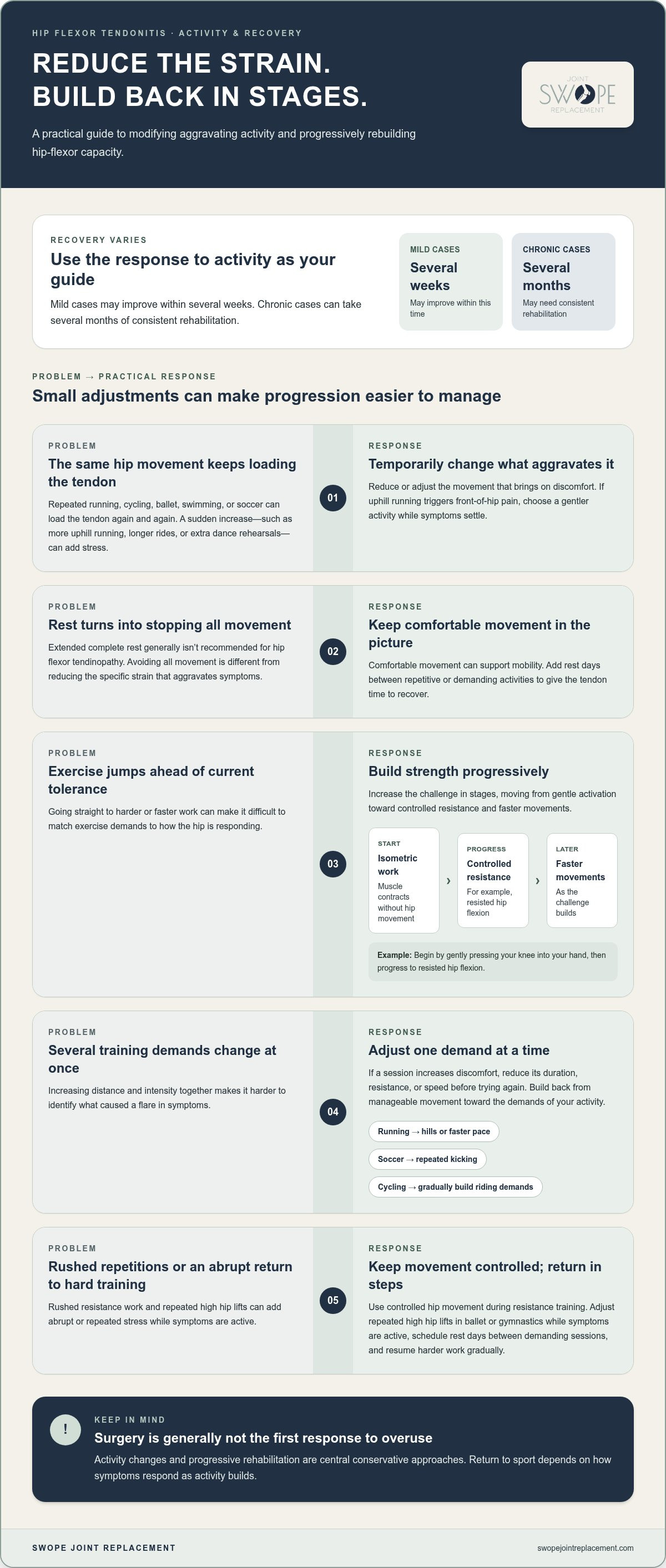
Hip flexor tendonitis is irritation of a tendon that helps lift your thigh, often after overuse or strain from repeated hip bending. Mild cases may improve within several weeks, while chronic cases can take several months of consistent rehabilitation. Returning to sports depends on how symptoms respond as activity builds.
Repetitive Hip Movements and Overuse
Repetitive hip movements load the same tendon again and again, and a sudden increase in training can add more stress than it can adapt to. Running, cycling, ballet, swimming, and soccer all involve repeated hip action. A quick increase in uphill running, longer rides, or extra dance rehearsals can contribute to irritation, even if each activity felt manageable before.
Rest and Activity Modification
Activity modification means temporarily reducing or changing movements that aggravate the hip, rather than stopping all movement. If running uphill brings on front-of-hip pain, choose a gentler activity and reduce that strain while symptoms settle. Extended complete rest generally isn’t recommended for hip flexor tendinopathy. Comfortable movement can support mobility, while rest days between repetitive activities give the tendon time to recover.
Progressive Strengthening and Return to Exercise
Progressive strengthening rebuilds the tendon’s capacity by increasing the challenge in stages. Rehabilitation may start with isometric work, where the muscle contracts without moving the hip, then advance to controlled resistance and faster movements. For example, you might begin by gently pressing your knee into your hand, then progress to resisted hip flexion. Gradual progression helps match exercise demands to your current tolerance.
Use your symptoms to guide changes in activity. If a session increases discomfort, reduce its duration, resistance, or speed before trying again. A return to running, cycling, or soccer should build from manageable movement toward the sport’s actual demands, such as hills, faster pace, or repeated kicking. Avoid increasing several training demands at once: changing distance and intensity together makes it harder to identify what caused a flare.
Technique and recovery also matter. During resistance training, controlled hip movement may place less abrupt stress on the tendon than rushed repetitions. For ballet or gymnastics, repeated high hip lifts can be adjusted while symptoms are active. Schedule rest days between demanding sessions, and resume harder work in steps rather than jumping straight back to your previous routine. Surgery is generally not the first response to overuse; activity changes and progressive rehabilitation are central conservative approaches.
Physical therapy
Physical therapy can address hip symptoms through guided movement, stretching, and strengthening. An assessment also helps connect your discomfort with specific tasks, such as standing, walking, or lifting your knee.
Physical Examination and Stretching
A physical examination checks how your hip moves and which positions reproduce discomfort. That information helps shape stretching and exercise around your symptoms, rather than relying on a generic routine. A therapist may assess flexibility, strength, and range of motion, then observe a movement such as standing from a chair. Gentle stretches can support flexibility and joint movement, especially when introduced gradually after activity.
The examination also considers your activity history and symptom pattern. Pain during a knee lift, for example, may guide which movements need modification and which muscles need careful activation. A physical therapist can select exercises to strengthen hip muscles, improve flexibility, and restore range of motion. The plan may change as movement becomes more comfortable or certain tasks remain difficult.
Physical Therapy and Treatment Costs
The cost of physical therapy or treatment in the United States depends on the care plan. Factors include the evaluation, visit frequency, imaging, and whether an injection is part of treatment; pricing for a specific treatment plan is given after a quote request. These details matter because the treatment approach and services involved shape the overall expense.
Stretching is one part of rehabilitation, not a substitute for assessing how the hip tolerates movement. A seated butterfly stretch held for 30 seconds may address flexibility, while a lunge stretch held for 20-30 seconds per side targets the hip-flexor area. A therapist can adjust position or duration if either stretch increases discomfort. Gentle stretching after activity may also support joint movement and reduce tendon strain.
Imaging is not automatically needed for every physical therapy plan. If symptoms are severe, persistent, or unclear, ultrasound or MRI may help evaluate tendon structure; ultrasound can show thickening or structural changes, while MRI provides detailed soft-tissue images. The physical examination and symptom history help determine whether imaging adds useful information. For care centered on non-operative options, non-operative treatment options can be part of a broader discussion about managing hip symptoms.
Clinical examination and imaging
Diagnosis begins with your symptoms, activity history, and a focused physical examination. Imaging may add detail when hip pain is severe, persistent, or difficult to explain.
Clinical Examination and Diagnosis
A clinical examination combines your medical history with an assessment of the abdomen, hip, and groin. This helps connect symptoms with movement, recent activity, or an injury, rather than treating an image alone. Hip flexor tendonitis is considered alongside other possible causes of pain, and the examination can help identify which movements reproduce symptoms.
Seek clinical assessment for severe, persistent, or unclear hip pain. If symptoms worsen suddenly or feel urgent, seek prompt medical attention instead of continuing exercises.
Expect questions about where discomfort occurs, when it began, and what makes it worse. A clinician may ask about repetitive activity, a recent training change, or a specific injury. Your answers help establish whether pain relates to hip flexion and whether symptoms interfere with everyday movement. Mention pain at rest as well as discomfort during activity, since both help describe the pattern.
The physical examination adds information that your history cannot provide alone. The clinician may assess hip movement and examine the surrounding area, including the groin. Findings are considered together: a painful movement matters most when it fits the reported symptom pattern. This combined approach helps shape the diagnosis and guides whether imaging would clarify the suspected cause.
Imaging Tests
Imaging tests provide views of bones, tendons, and other soft tissues around the hip. X-rays can help examine the hip joint, while ultrasound may show tendon thickening or structural changes. MRI provides detailed soft-tissue images. The choice depends on your symptoms and examination findings, especially when the cause remains unclear.
An X-ray and an MRI answer different questions. X-rays show the joint and surrounding bone structures; MRI offers a closer view of soft tissues, including tendons. Ultrasound can assess tendon structure, including thickening. These methods support the clinical assessment rather than replace it, because an image needs to be interpreted alongside your history and physical findings.
Imaging is more useful when it addresses a specific uncertainty. If symptoms remain persistent or severe, ultrasound or MRI may help clarify tendon changes. If the history and examination already provide a coherent explanation, additional imaging may not change the next step. Diagnosis should connect what you feel, what movement reveals, and what an image can actually show.
Bring a clear account of recent activities, symptom changes, and any injury to your assessment. For example, note whether pain appears during a particular exercise or continues afterward. That detail helps the clinician interpret examination findings and choose imaging only when it adds useful information.
Corticosteroid and PRP injections
Treatment may combine activity changes, ice, physical therapy, and medication. For hip flexor tendon symptoms, injections may be considered when pain or inflammation persists, with the choice guided by the suspected tendon or joint source.
For symptom relief at home, ice applied for 15-20 minutes several times a day may help numb pain, particularly after activity. Ibuprofen or naproxen are examples of nonsteroidal anti-inflammatory drugs that may ease pain and inflammation. Medication choices should account for your health history and other medicines, rather than being treated as a substitute for diagnosis.
Physical therapy remains a conservative option. A therapist may guide stretching and strengthening to address flexibility, hip muscle strength, and range of motion. Rest from movements that aggravate symptoms can also be paired with comfortable activity. These measures address the load on the tendon and preserve movement while treatment progresses.
A corticosteroid injection may be considered for persistent or severe inflammation and pain. It can be administered into the hip joint, and an injection with local anesthetic may also be used in treating iliopsoas tendonitis. The injection site matters: the hip joint, iliopsoas tendon, and surrounding structures are distinct targets. The clinical examination helps connect symptoms to the area under consideration.
In suspected iliopsoas tendonitis, an ultrasound-guided injection of 1% lidocaine into the hip joint, targeting the iliopsoas tendon, may serve as a diagnostic challenge. This is different from a corticosteroid injection used to address inflammation. Understanding the purpose helps clarify whether an injection is intended to inform diagnosis, manage pain, or both.
PRP means platelet-rich plasma and describes a different injection approach from corticosteroid treatment. The two should not be treated as interchangeable. A meaningful discussion distinguishes the proposed target, the reason for considering the injection, and how it fits with conservative care such as exercise or physical therapy. The treatment plan should align with the clinical findings rather than the injection name alone.
Before an injection, clarify which structure is being targeted and what the injection is intended to accomplish. For example, persistent pain linked to the hip joint may prompt a different approach from symptoms localized around the iliopsoas tendon. Your symptom pattern, examination, and any imaging findings provide context for weighing medication, therapy, and injection options together.
Hip flexor tendon structure and function
Your hip moves through coordinated work between muscles, tendons, and bones. Understanding where these structures connect explains why irritation can affect lifting your knee, climbing stairs, or walking.
A tendon is connective tissue that attaches muscle to bone. At the hip, the iliopsoas muscle group includes the iliacus, psoas major, and psoas minor. The iliacus and psoas major are the primary hip flexors. They begin in the pelvis and lower spine, then connect to the femur through the iliopsoas tendon.
When these muscles contract, they help flex the hip, bringing your thigh forward. The rectus femoris, part of the quadriceps, also contributes to hip flexion. These connections explain why hip-flexor symptoms may appear during activities that repeatedly lift the leg. A tendon transfers muscle force to bone, so overuse or repeated strain can irritate the tissue involved.
In hip flexor tendonitis, irritation affects the tendon associated with the hip-flexing muscles. It differs from a muscle strain, although symptoms can overlap. Pain at the front of the hip or groin during a knee lift, for example, may involve the iliopsoas tendon. An orthopaedic assessment considers the exact location, the movements that reproduce symptoms, and any history of overuse or injury.
Stretching and strengthening address different parts of this system. Stretching can support flexibility and hip movement, while strengthening helps muscles manage the forces involved in activity. Neither should be treated as a test of toughness. If a stretch or exercise increases discomfort, the movement or its intensity may need adjustment. This is one reason rehabilitation progresses from manageable contractions toward more demanding motion.
Most cases are approached first with conservative care, such as activity modification and rehabilitation. Surgery may be considered for severe iliopsoas tendonitis that hasn't responded to conservative, noninvasive treatment. A procedure may involve partial or complete release of the iliopsoas tendon. Because that tendon contributes to hip flexion, understanding the diagnosis and treatment goal matters before considering surgery.
The key takeaway is that front-of-hip pain can arise where muscle force passes through tendon to bone, not only from the muscle itself. If symptoms persist despite conservative care, discuss your hip symptoms with an orthopaedic specialist to understand the diagnosis and appropriate treatment options.
Swope Joint Replacement: Direct Anterior Hip Replacement
Swope Joint Replacement offers Direct Anterior Hip Replacement for people whose assessment indicates that hip replacement may be appropriate. Tendon irritation alone does not mean you need replacement surgery. The important distinction is whether symptoms come from the tendon or from a broader problem in the hip joint.
If hip pain continues despite non-operative care, an orthopaedic evaluation can help clarify its source and discuss suitable options. When joint disease is the concern, you can learn whether direct anterior hip replacement fits your situation. The discussion should address your diagnosis, treatment choices, and what matters to you in daily life.
Contact Swope Joint Replacement to discuss your hip concerns and possible next steps.
Choose a Clear Next Step for Your Hip
Persistent hip flexor tendonitis symptoms can leave you weighing whether to continue conservative care or discuss a broader hip concern. That decision starts with understanding what is driving your symptoms and how they affect the movements and activities that matter to you. A focused orthopaedic conversation can help you consider the options without assuming that tendon pain means you need surgery.
Swope Joint Replacement offers Direct Anterior Hip Replacement, Knee Replacement, and Revision Hip Replacement. These procedures address joint replacement needs, not tendon irritation alone. If your evaluation points to a hip joint problem, a discussion can help clarify whether hip replacement belongs among your options. Your questions and personal goals should remain part of that decision.
If you’re ready to discuss your symptoms and possible next steps, contact Swope Joint Replacement. A thoughtful conversation can help you move forward with greater clarity and confidence.
Frequently Asked Questions
What is Hip Tendinitis?
Hip tendinitis is inflammation affecting a tendon around the hip. Tendons connect muscles to bones, transmitting force when muscles contract. Repeated stress or injury can inflame tendon tissue, causing pain near the affected area. For example, irritation involving a hip flexor tendon can make lifting the thigh uncomfortable. The exact tendon involved matters because several structures contribute to hip movement, and symptoms can overlap with other hip conditions.
What is hip tendonitis?
Hip tendonitis is another spelling for hip tendinitis. Both terms describe inflammation of a tendon near the hip, rather than a problem limited to the muscle belly. Repeated movement, overuse, or a strain can irritate tendon tissue. If discomfort appears after a new or demanding activity, note which movements bring it on and whether it settles afterward. Those details help describe the issue during an assessment.
What Are Hip Flexors and Where Is Pain Felt?
Hip flexors are muscles that help lift your thigh and bend your hip. The iliopsoas, formed primarily by the iliacus and psoas major, connects the pelvis and lower spine to the femur. The rectus femoris also helps flex the hip. Pain involving these structures is often felt at the front of the hip or in the groin, especially during leg lifting or repeated bending.
What causes pain in the front of the hip when lifting the leg?
Pain at the front of your hip during a leg lift can involve the iliopsoas tendon or nearby hip-flexing muscles. Repeated hip flexion, overuse, or strain can irritate the tendon. A snap or click during movement can also occur with iliopsoas tendon irritation. The symptom alone doesn’t identify the cause, so note whether pain occurs only during lifting or also during ordinary activities.
Why does my hip hurt when walking up stairs?
Climbing stairs repeatedly asks your hip to bend and support your body, which can aggravate an irritated hip flexor tendon. Pain can also arise from other structures around the hip, so stair discomfort alone doesn’t confirm tendonitis. Notice where it hurts, whether the pain occurs while lifting or lowering your leg, and whether ordinary walking causes similar discomfort. This pattern gives a clinician useful context.
What are the symptoms, and how is the condition diagnosed?
Symptoms can include front-of-hip or groin pain, tenderness, tightness, and discomfort with activities such as lifting your thigh. Diagnosis starts with your symptom history and an examination of the hip and groin; ultrasound or MRI can help assess unclear or persistent symptoms. For local orthopaedic evaluation, Swope Joint Replacement serves Overland Park, Kansas City, Olathe, Lee’s Summit, Lenexa, Leawood, Blue Springs, and Independence. Office visits and in-office procedures have transparent cash pricing.
How is tendonitis different from a hip flexor strain, bursitis, or labral tear?
Tendonitis describes inflammation in a tendon, while bursitis means inflammation of a fluid-filled sac near a joint. A hip flexor strain involves an injury affecting muscle or tendon tissue, and a labral tear concerns another structure in the hip. These conditions can produce overlapping pain, so location and symptoms alone may not distinguish them. A clinical examination, with imaging when useful, helps assess which structure is involved.
What exercises and stretches are recommended, and which should be avoided?
Rehabilitation can begin with a gentle isometric contraction, such as pressing your knee lightly into your hand without moving the hip. A therapist can then guide stretching and strengthening based on your symptoms and movement. Avoid pushing through a stretch or exercise that sharply increases discomfort. Also modify activities that repeatedly trigger pain, such as uphill running or high knee lifts, before gradually rebuilding those demands.



Comments