Private Bone Fracture Doctor Care in Kansas City

A suspected broken bone needs an orthopedic assessment. A private bone fracture doctor in Kansas City can evaluate the injury, determine an appropriate treatment plan, and provide follow-up care. Depending on the fracture, treatment may involve a cast, brace, sling, or other support.
It’s natural to feel uncertain after an injury, especially when pain or swelling makes it hard to tell what’s happening. The right care starts with understanding the injury and how it affects your movement, comfort, and daily routine. This guide explains what to do when you may have a broken bone and what to expect from fracture care.
You’ll learn how fractures are assessed, which treatment approaches may be considered, how orthopedic specialties and care locations differ in Kansas City, and when personalized fracture care may be a useful next step.
Table of Contents
Fracture and trauma care
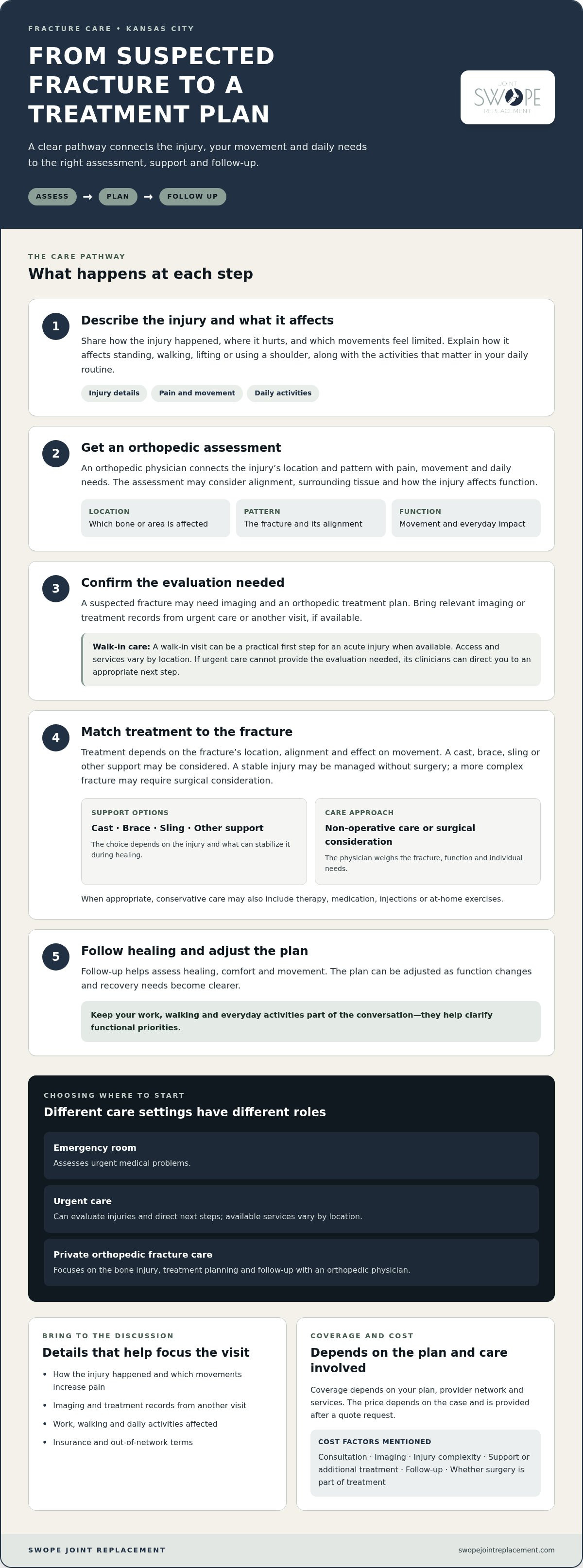
A fracture can affect more than the bone itself. It may limit how you stand, walk, lift, or use a shoulder. An orthopedic physician assesses the injury, determines appropriate fracture treatment, and provides follow-up care. The assessment connects the injury’s location and pattern with your pain, movement, and daily needs.
How does private fracture care compare with an emergency room or urgent care? Emergency rooms assess urgent medical problems, while urgent care can evaluate injuries and direct next steps. Private orthopedic fracture care focuses on the bone injury, treatment planning, and follow-up with an orthopedic physician.
Does health insurance cover private orthopedic fracture care? Coverage depends on your plan, provider network, and the services involved. Out-of-network care may involve different benefits and patient costs than in-network care, so review your plan’s terms for the specific appointment.
How much does a private fracture consultation cost in the United States? The price depends on the case and is given after a quote request. Factors include the consultation, imaging, injury complexity, and any additional treatment; a consultation alone may not reflect the full care needed.
For an acute injury, a walk-in visit can be a practical first step when available. Walk-in access and services vary by location, so identify whether the setting can assess and manage the injury. A suspected fracture may need imaging and an orthopedic treatment plan. If urgent care cannot provide the evaluation you need, its clinicians can direct you to an appropriate next step.
Foot and ankle injuries can affect balance and ordinary movement. A twisted ankle, for example, may involve more than a sprain, so describe how the injury happened and where it hurts. An orthopedic assessment can help distinguish the affected structures and guide support, activity changes, or further treatment. Shoulder injuries also deserve attention when pain limits lifting or reaching.
Care should reflect the fracture and the person, not a standard pathway. A stable injury may be managed without surgery, while a more complex fracture may require surgical consideration. The physician weighs the fracture’s location, alignment, surrounding tissue, and effect on function. Follow-up tracks healing and helps adjust the plan as movement changes.
Bring details about how the injury happened and which movements increase pain.
Share relevant imaging and treatment records from urgent care or another visit.
Discuss your work, walking, and daily activities to clarify functional priorities.
Review insurance and out-of-network terms alongside the proposed care plan.
Trauma and fracture care addresses bone injuries alongside related musculoskeletal concerns. A private bone fracture doctor can assess the injury, explain treatment options, and coordinate follow-up around your needs. Clear information about the injury, your shoulder or foot and ankle symptoms, and your insurance can make that discussion more focused.
Fracture treatment options
Treatment depends on the fracture’s location, alignment, and effect on movement. Your orthopedic plan may involve support, non-operative care, or surgery.
A cast, brace, sling, or other support may protect a fracture, depending on the injury. The clinician considers which bone is affected and whether the support can stabilize it during healing. A wrist fracture, for example, may need a different approach from a fracture near a major joint. Follow-up helps assess comfort, movement, and whether the plan needs adjustment.
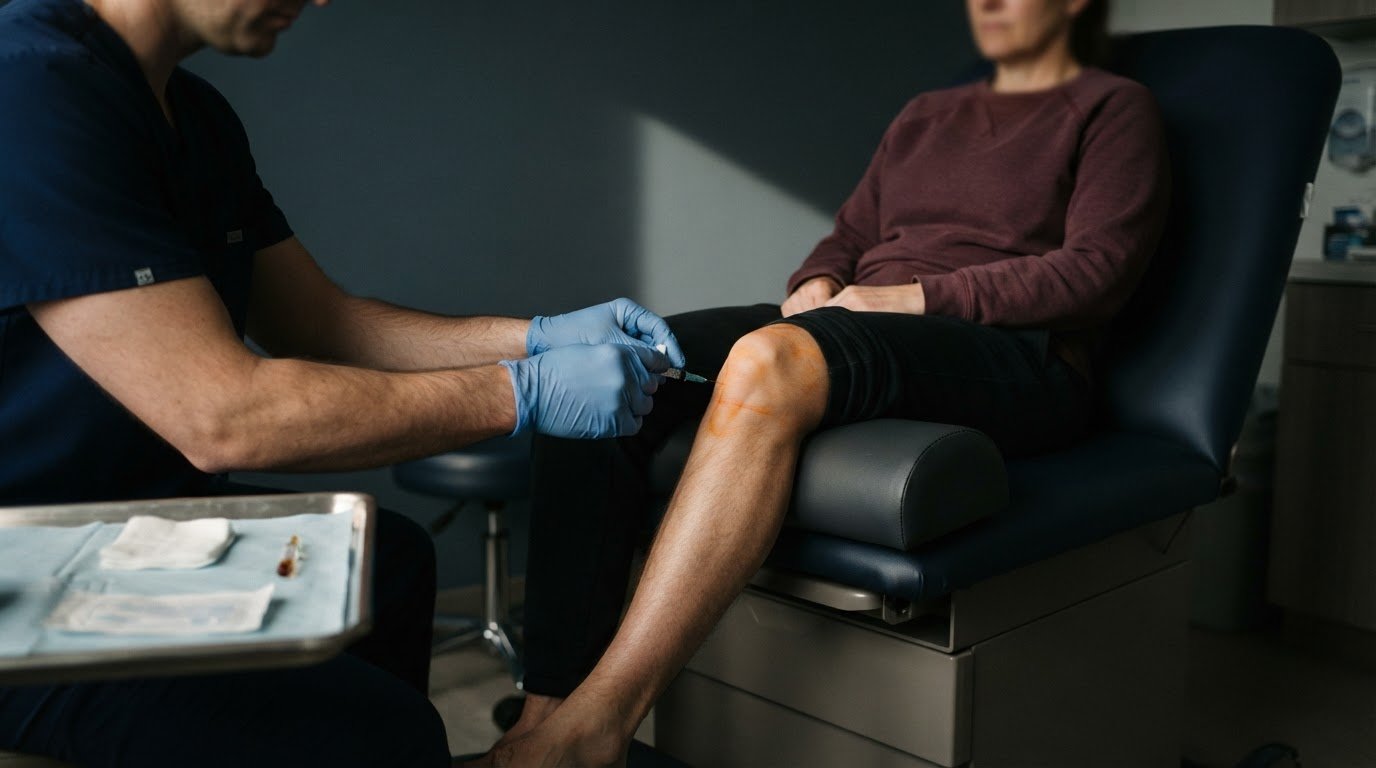
Bone and joint care also considers how an injury changes daily function. A fracture near a joint can affect bending, gripping, or bearing weight. Sports injuries may involve more than one musculoskeletal structure, so explain how the injury happened and which activities now hurt. Therapy, medication, injections, or at-home exercises may be considered as conservative orthopedic treatments when appropriate.
Hand and wrist injuries can interfere with writing, dressing, cooking, or work. Share which movements feel limited, whether swelling changes, and whether you can use your fingers normally. These details help the provider assess function alongside imaging and the injury pattern. Advanced treatment does not automatically mean surgery; the goal is to match care to the fracture and your needs.
Costs for Fracture Imaging and Treatment
The price depends on the case and is given after a quote request. Cost factors include whether imaging is needed, the type of support, fracture complexity, follow-up, and whether surgery is part of treatment. Ask for the expected charges for each step, including X-rays, casting, and any planned procedure. Insurance benefits and network status can also affect your out-of-pocket responsibility.
Risks of Delaying Fracture Treatment
Waiting can delay assessment of the fracture’s position and the support it needs. According to the U.S. Government Publishing Office, bone fragments may overlap shortly after a fracture, and early use of a fixed traction splint may prevent this. The injury’s location and stability shape treatment decisions, so seek assessment rather than relying only on pain as a guide.
For a joint replacement decision, the fracture itself and the condition of the joint matter. Fracture care and joint replacement are not interchangeable treatments. A specialist evaluates the injury and function before considering which path fits. If you’re weighing non-operative care or surgical options, reviewing fracture treatment options can help you understand the available approach.
Provider specialties and locations
Choose an orthopedic specialist whose experience matches the injured area. In the Kansas City area, location matters too: the clinic or hospital setting should fit the evaluation and follow-up you need. If you live in Overland Park or Olathe, consider how travel may affect return visits.
Start with the injury site. A fracture near the hip, knee, wrist, or ankle can affect different movements and care decisions. When arranging an appointment, describe where you feel pain, how the injury happened, and whether another provider has taken images. Those details help direct your visit to an appropriate orthopedic specialty.
Specialists may focus on a particular part of the musculoskeletal system or provide broader orthopedic care. For example, a hand and wrist concern differs from a fracture near a large joint. Tendon symptoms can also accompany an injury, so include them when explaining what hurts. A committed provider considers the bone, nearby structures, and the function you want to regain.
A hospital and a clinic serve different roles in a patient’s care journey. A hospital may be the setting for complex evaluation or treatment, while a clinic may support appointments and follow-up. The right destination depends on the injury and services needed. Before traveling across Kansas City, identify the appointment setting and its role in your planned care.
Check the clinic location attached to your appointment, especially when comparing listings across the Kansas City area. Read the city and street address together, then match them to your intended destination. This step can prevent a trip to the wrong office when search results display similarly named practices or facilities in multiple communities.
Clinic locations can affect practical details beyond driving distance. Consider how easily you can return for follow-up, whether someone can accompany you, and whether the route works with limited mobility. For example, a patient using a brace may need a straightforward entrance and a manageable trip from the parking area. Plan transportation around the injured limb.
Provider listings can group specialists by program or facility. Read the specialty and location together, rather than relying on a provider name alone. A listing for a specialist elsewhere in the region does not identify a Kansas City care location. Check that the appointment is in your intended city and matches your orthopedic concern.
Bring a concise record to the visit: the injury date, affected area, prior imaging, and treatment received. For example, note whether a wrist injury followed a fall or sports collision. This context helps the specialist connect the examination with your symptoms and plan follow-up at the appropriate clinic or hospital.
Bone trauma and fractures
A fracture is one possible result of trauma, but the injury may involve nearby tissue too. A fall onto an outstretched hand, for example, can affect the wrist and surrounding structures. A sports collision may cause pain around a joint, even when the exact source isn’t obvious. Describe the event, the impact, and the areas that hurt during your orthopedic assessment.
A sprain can sometimes include a fracture. That overlap matters because pain after a twist doesn’t, by itself, identify the injured structure. An ankle injury, for example, may affect the joint’s supporting tissues and the bone. A dedicated orthopedic assessment considers the injury mechanism, tenderness, swelling, and movement together. Imaging can help clarify bone involvement when the examination calls for it.
Sports medicine and fracture care meet when an injury interrupts training or daily movement. A runner with a painful foot, or a player with a sore shoulder after contact, needs an assessment shaped around the affected area. Tell the orthopedic physician which motions hurt and which activities you need to resume. Those details help connect clinical findings with practical goals, rather than treating the image alone.
At the appointment, bring a clear account of what happened and what changed afterward. Mention prior injuries in the same area, any support already used, and whether symptoms affect sleep, walking, gripping, or lifting. If another practice took images, bring the records when available. This gives the specialist useful context and helps focus the discussion on the fracture, related concerns, and next steps.
A personalized plan considers more than whether surgery is possible. The physician weighs fracture location, alignment, nearby joint function, and your everyday demands. A stable injury may suit non-operative care, while a complex pattern may prompt discussion of surgical treatment. Ask what the proposed approach is intended to address, how follow-up will assess progress, and what changes should prompt another clinical review.
Explain the mechanism: Describe a fall, twist, direct impact, or sports collision.
Identify function changes: Note difficulty walking, gripping, reaching, or bearing weight.
Share prior care: Bring imaging reports and details of support already used.
Discuss your priorities: Explain work, recreation, or daily tasks affected by the injury.
For patients in Kansas City, Overland Park, Olathe, Lenexa, Leawood, Lee’s Summit, Blue Springs, and Independence, a focused practice can connect trauma evaluation with orthopedic follow-up. The useful takeaway is simple: don’t assume a sprain excludes a fracture, and don’t judge an injury only by how it feels. Give the specialist specific details about the event, affected area, and movement concerns. That information supports a clearer evaluation and a treatment conversation grounded in your needs.
How do I find a private orthopedic fracture doctor near me?
Start with three details: your location, the injured area, and the care you need. In Kansas City, search for orthopedic fracture care close enough for follow-up. Then match the provider’s orthopedic focus to the injury, such as a wrist fracture, ankle injury, or fracture near a joint.
A private bone fracture doctor can assess a suspected fracture and guide treatment. An orthopedic physician determines the appropriate treatment and provides follow-up care. When reviewing care options, look for a clear connection between fracture evaluation, treatment planning, and continued orthopedic follow-up.
Use these steps to narrow your search and prepare for an appointment:
Identify the injured area: Note whether the concern involves a hip, knee, hand, wrist, foot, or ankle.
Gather your records: Bring prior imaging, visit notes, and details of any support already used.
Consider the location: Choose a Kansas City clinic location that works for travel and follow-up visits.
Review payment details: Compare your insurance benefits with the provider’s out-of-network or cash-pricing options.
Describe your priorities: Explain which tasks, such as walking or gripping, have become difficult.
At the appointment, explain how the injury happened and what changed afterward. A fall, twist, or sports impact gives useful context. Describe the movements that hurt, any limits on walking or lifting, and previous injuries in that area. If you already visited urgent care, bring its records so the orthopedic physician can consider that evaluation.
Location and specialty both matter. A directory may show specialists in several cities, so read the practice location carefully before scheduling. Maple Grove Hospital, for example, is a facility name, not a Kansas City location. Confirm the city and street address attached to the appointment to avoid confusing similarly described regional listings.
Ask how the visit will address your specific concern. For example, clarify whether the evaluation includes reviewing existing images, discussing non-operative treatment, and planning follow-up. These details help you understand the process without assuming every fracture needs surgery. Treatment depends on the injury’s location, pattern, and effect on function.
If you need a focused next step in Kansas City, explore Trauma & Fracture Care for orthopedic fracture evaluation and treatment planning. Bring your injury history and records to make the discussion more useful. A clear account of what happened, where it hurts, and what movement is limited helps frame your care around the actual injury.
Explaining what hurts and what you can no longer do can help keep the visit focused on your needs. Before booking, confirm that the clinician sees the type of fracture or injury you have and that the appointment is at a location you can reach for follow-up. If a directory result is for another city, check its practice address rather than relying on a broad regional label.
Healthgrades lists 11 orthopedic surgery specialists practicing in Becker, Minnesota. That listing does not establish that those specialists practice in Kansas City, so verify the city and clinic location before scheduling. You can also ask the office what records to bring and how to share imaging obtained elsewhere. These checks help you choose a clinician whose location and orthopedic focus fit your situation.
Swope Joint Replacement: Direct Anterior Hip Replacement
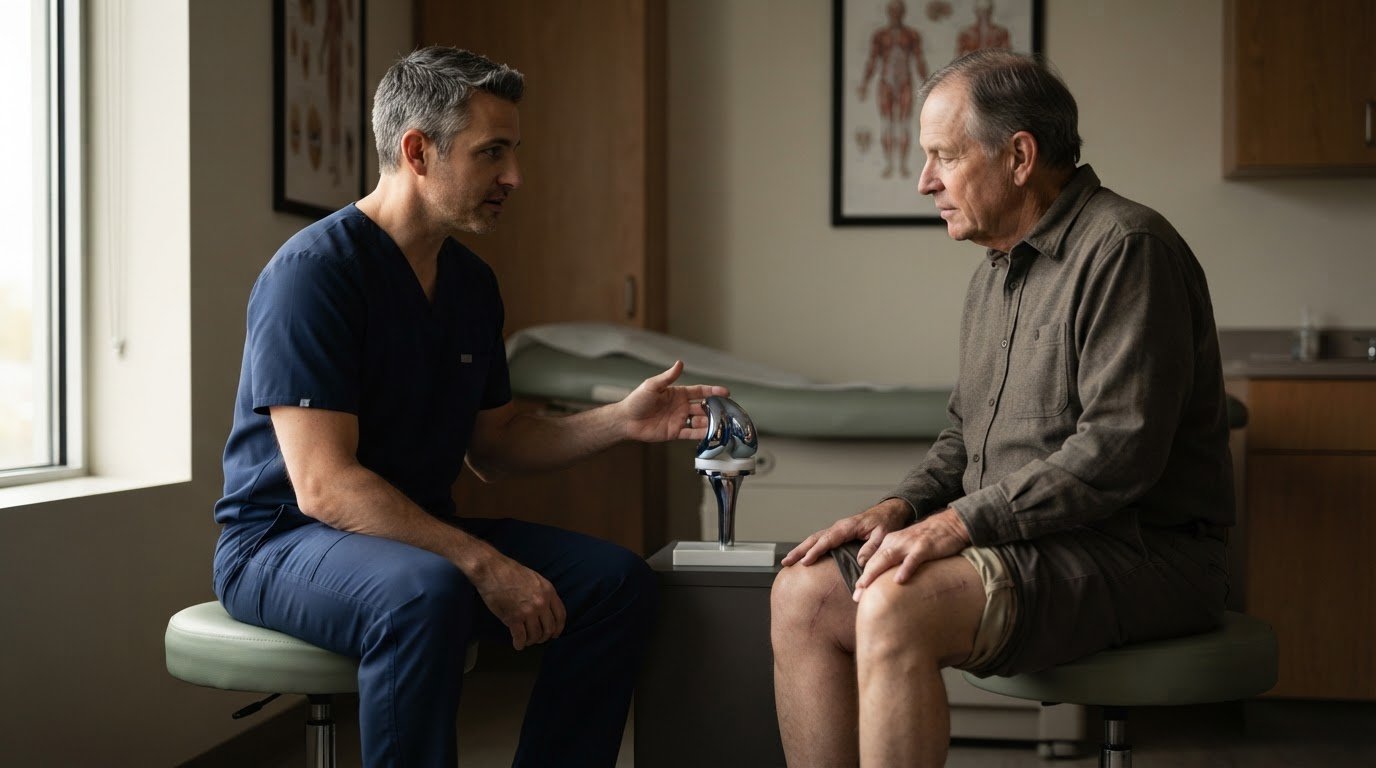
Swope Joint Replacement provides specialized orthopedic care for hip and knee joint problems, including when a replacement discussion is appropriate. A fracture evaluation and a joint replacement decision are different steps, but an injury affecting a joint may prompt questions about longer-term treatment. The appropriate path depends on the diagnosis and your individual needs.
Surgical offerings include Direct Anterior Hip Replacement, Robotic-Assisted Knee Replacement, Revision Hip Replacement, Revision Knee Replacement, and Partial Knee Replacement. If you’re considering hip or knee replacement after discussing your injury and joint health with an orthopedic physician, Swope Joint Replacement can help you explore that option and understand the next steps.
Contact Swope Joint Replacement or visit swopejointreplacement.com to learn more.
Choose a Clear Next Step for Your Orthopedic Care
Your next conversation can focus on more than the immediate injury. Consider what you want to return to, which movements matter most, and what questions would help you feel informed about your choices. A private bone fracture doctor can discuss the fracture and its care; if concerns involve a hip or knee joint, ask how those concerns relate to your broader orthopedic needs.
Swope Joint Replacement offers Direct Anterior Hip Replacement, Robotic-Assisted Knee Replacement, Revision Hip Replacement, Revision Knee Replacement, and Partial Knee Replacement. These services may be relevant when your care discussion turns to hip or knee replacement, including revision surgery. Bring your priorities and questions so the conversation can address the treatment options that fit your situation.
Contact Swope Joint Replacement today to discuss your orthopedic care. Taking a thoughtful next step can help you move forward with greater clarity.
Frequently Asked Questions
What if I have a broken bone?
Protect the injured area and arrange a medical assessment. Avoid putting weight on a painful leg or using an injured arm, and keep the limb supported in a comfortable position while you arrange care. For example, if a fall leaves your wrist painful and difficult to move, don’t try to test its strength. An orthopedic physician can assess the injury and determine the next step.
What type of doctor treats bone fractures privately?
An orthopedic physician treats fractures, and an orthopedic surgeon may assess injuries that could require surgery. The right clinician depends on the bone involved and the injury’s complexity. For a private appointment, bring any imaging or visit notes you already have. Ask how the clinician will address the fracture and its follow-up, so you understand who will guide your care.
How quickly should I see a doctor for a suspected broken bone?
Arrange an assessment promptly rather than waiting to see whether pain resolves. A fracture’s position and the support it needs require clinical evaluation. If the injury is severe or needs emergency attention, go to an emergency department rather than waiting for a private appointment. For a less severe injury, contact an orthopedic practice and share how it happened and which area is affected.
Comments