Hip Bursitis Treatment: Diagnosis, Relief, and Non-Surgical Options

What if the pain you call “hip bursitis” isn’t coming from the bursa alone? Pain on the outside of your hip that worsens when you lie on that side or climb stairs can fit this diagnosis, but similar symptoms may have other causes. That distinction matters: the right hip bursitis treatment depends on identifying what’s driving your pain.
It’s understandable to want relief and clear guidance on what to try next. This article explains common symptoms and possible causes, and how a clinician can assess whether bursitis or another condition may be involved. You’ll learn how activity changes, home care, physical therapy, medication, and targeted injections may fit into a non-surgical plan, depending on your symptoms and goals.
Care often begins with conservative measures, but there isn’t one approach that suits everyone. Learn what to discuss with a clinician, why treatment may address nearby tendons as well as the bursa, and when new or worsening symptoms deserve prompt assessment. The aim is to help you take a measured next step with better information and less guesswork.
Table of Contents
Hip bursitis treatment starts with understanding where the pain comes from
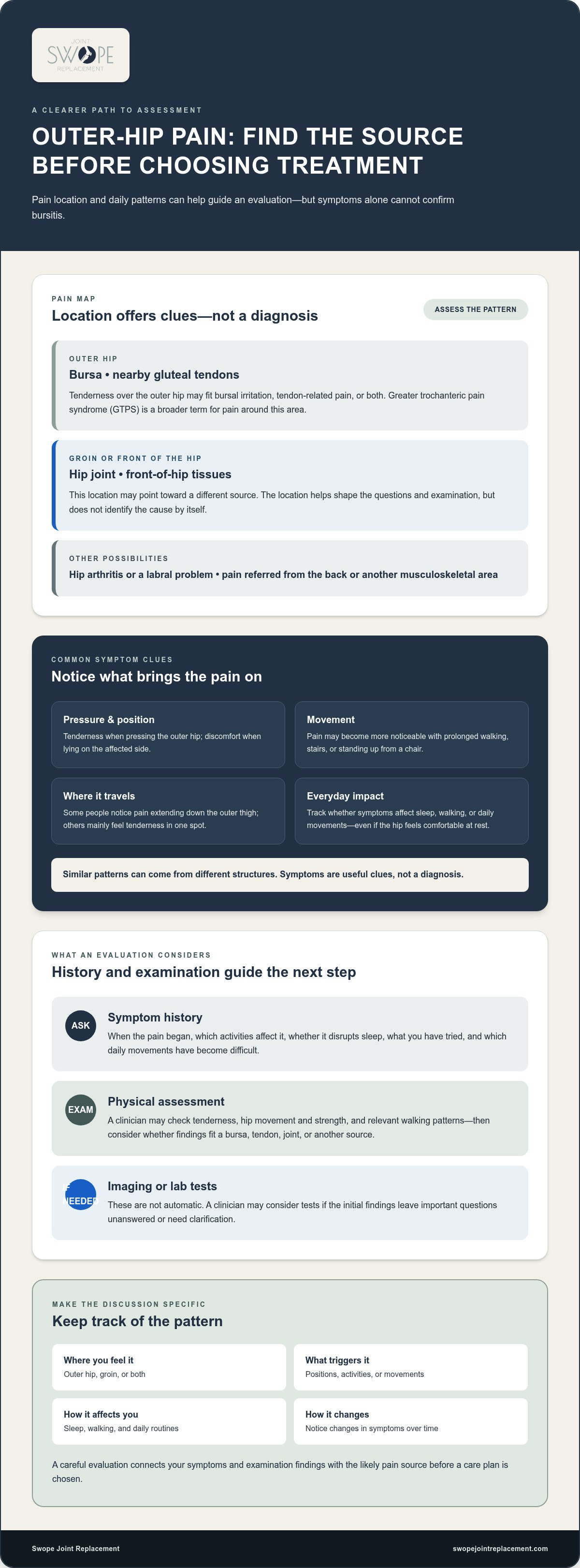
Hip pain can make ordinary movements feel unexpectedly difficult. Before choosing a treatment, it helps to understand where the discomfort is located and what structures may be involved. A bursa is a small, fluid-filled sac that helps reduce friction where tissues, such as tendons and bone, move against one another.
Hip bursitis is inflammation of a bursa around the hip. The term describes an inflamed structure, not every cause of hip pain. Tenderness on the outside of the hip can be associated with the greater trochanteric bursa, but symptoms alone can’t confirm that it is inflamed. The Trochanteric bursitis overview describes this condition and its common symptom patterns.
Where are the hip bursae, and what do they do?
The greater trochanter is the bony prominence on the outer side of the upper thigh, near the hip. A bursa in this area cushions movement between the bone and nearby tissues. When the area is irritated, pressure on the outer hip may be uncomfortable, including when you lie on that side.
Other bursae sit in different areas. The iliopsoas bursa is toward the front of the hip, where discomfort may be felt in the groin. That location can also be associated with other hip-joint or soft-tissue problems. In practical terms, outer-hip pain and groin pain point to different areas worth considering, but neither location identifies the cause by itself.
What symptoms commonly lead people to seek hip bursitis treatment?
People often describe tenderness when pressing over the outer hip or pain that travels down the outer thigh. Discomfort may become more noticeable when lying on the affected side, walking for a prolonged period, climbing stairs, or standing up from a chair. These patterns can affect sleep and daily routines, even when the hip feels relatively comfortable at rest.
Symptoms vary. One person may mainly notice pain with side-lying; another may find stairs or longer walks more difficult. Similar symptoms can arise from nearby tendons, the hip joint, or pain referred from another area. A symptom pattern can offer useful clues, but it isn’t a diagnosis.
Notice whether the pain is mainly at the outer hip, in the groin, or in both areas.
Pay attention to which activities or positions bring it on, and whether it extends down the thigh.
Note how the symptoms affect sleep, walking, and everyday movements.
These observations can make a clinical conversation more specific. A clinician considers them alongside your history and examination before recommending hip bursitis treatment. The goal is to identify the likely source of pain, not to assume that every sore hip is bursitis.
Why an evaluation matters before choosing hip bursitis treatment
Pain on the outside of your hip can come from more than an inflamed bursa. Nearby gluteal tendons, the hip joint, or pain referred from another area may create overlapping symptoms. Pain location alone cannot establish a diagnosis of hip bursitis. An evaluation helps connect what you feel with examination findings before a treatment plan is chosen.
Greater trochanteric pain syndrome (GTPS) is a broader term for pain around the outer hip. It can include irritation of the bursa, but gluteal tendon problems, sometimes involving the tendons that help stabilize the hip, may also contribute. Hip-joint conditions such as arthritis or a labral problem can cause pain in different areas, while some back or other musculoskeletal conditions may refer pain toward the hip. A symptom checklist can suggest possibilities, but it can’t reliably distinguish them on its own.
What conditions can feel like hip bursitis?
Outer-hip tenderness and pain with movement may occur with bursal irritation or tendon-related problems, and more than one structure can be involved. Groin pain may point toward a different source, including the hip joint or tissues at the front of the hip. These patterns guide questions and examination; they aren’t a diagnosis by themselves, and they don’t mean every person needs imaging.
What may happen during an orthopaedic evaluation?
Your clinician may ask when the pain began, what activities affect it, whether it disrupts sleep, what treatments you’ve tried, and which daily movements have become difficult. These details put the symptoms in context. For example, pain that changes with walking, rest, or a particular activity can help guide what the clinician examines next.
The physical examination may include checking for tenderness, assessing hip movement and strength, and observing relevant walking patterns. Together, your history and examination can help clarify whether the findings fit a bursa, tendon, joint, or another source of pain. The Bursitis Diagnosis and Treatment guidance from Mayo Clinic also describes how assessment may include a medical history and physical examination.
Imaging or lab tests aren’t automatic. If the initial findings leave important questions unanswered, a clinician may consider tests to investigate other possible causes or clarify the diagnosis. The type of test depends on the clinical picture, rather than being required for everyone with outer-hip pain.
A careful assessment makes hip bursitis treatment more specific to the likely pain source, your symptoms, and your activity goals. If hip pain is limiting your movement, an individualized orthopaedic evaluation can help inform a non-surgical care plan.
Which hip bursitis treatments may help, and what are their limits?
Once an evaluation points to a likely pain source, treatment can be matched to your symptoms and daily demands. Conservative care often begins with adjusting activities that provoke discomfort, then adding appropriate comfort measures and rehabilitation. The aim isn’t simply to stop moving. It’s to reduce irritation while maintaining useful movement and addressing the cause identified during assessment.
No single approach works the same way for everyone. If pain relates more to a tendon or the hip joint than to an inflamed bursa, the plan may need to address that structure instead. A thoughtful hip bursitis treatment plan should reflect the diagnosis, your symptoms, and your personal activity goals.
How do rest, ice, medication, and physical therapy fit together?
Modify activities that repeatedly aggravate the hip, such as a particular exercise or prolonged side-lying, without defaulting to complete or prolonged inactivity. A cold pack may offer comfort; use it appropriately and protect your skin. Pain-relief medicines may also be considered, but discuss what’s suitable with a clinician, especially if you have other health conditions or take other medications.
Physical therapy can help restore comfortable movement and build strength, but exercises should fit the diagnosis. A therapist may adjust the type, intensity, and progression of mobility or strengthening work based on how your hip responds. Pushing through worsening pain isn’t a reliable way to progress; share symptom changes so the plan can be reconsidered.
Activity modification reduces specific triggers while preserving tolerable movement.
Cold packs may provide short-term comfort, but don’t identify or resolve the underlying cause.
Medication may help manage symptoms when a clinician considers it appropriate for you.
Physical therapy can guide tailored movement and strengthening based on the assessment.
When might an injection or another intervention be considered?
If symptoms persist despite conservative measures, a clinician may discuss a targeted injection. A corticosteroid injection may reduce symptoms for some people, sometimes in the short term, but it isn’t a guaranteed or permanent solution. Its potential role depends on the suspected pain source and your individual circumstances. Repeated injections may carry concerns, including tissue weakening, so decisions about their use should be clinician-directed.
Targeted injections are one part of non-operative care. Medication management and rehabilitation planning may also be considered in light of your evaluation and goals. For a closer look at the purpose and considerations involved, explore these joint injection therapy options.
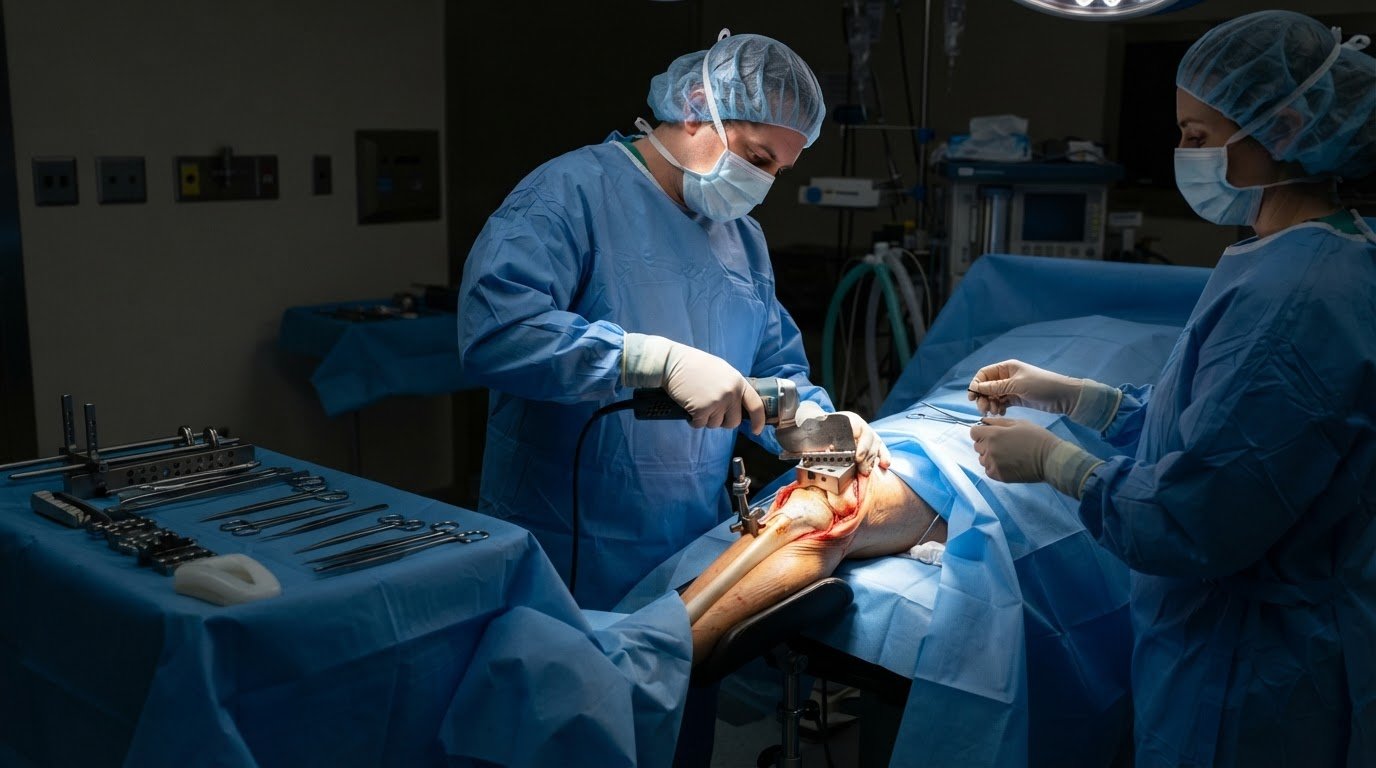
Surgery is uncommon for bursitis. It may be considered only in persistent cases when an identified problem hasn’t responded to non-surgical care. The key is to avoid treating a label alone: the plan should address the structure and condition that best explain your symptoms, with the benefits and limits of each option discussed openly.
Managing Hip Bursitis at Home and When to See a Doctor
Home care can help you manage symptoms while you observe how your hip responds. Keep the process measured: reduce activities that reliably aggravate the pain, use appropriate comfort measures, then reassess how you’re moving. These steps may help you understand your limits, but they can’t confirm what’s causing the pain.
What can you adjust while symptoms are active?
Temporarily scale back a specific trigger, such as a walk that brings on increasing discomfort or an exercise that presses on the sore area. Avoid complete inactivity if you can move comfortably. As symptoms allow, gradually return to activities rather than immediately resuming the same duration or intensity. Don’t push through sharp or worsening pain during stretching or exercise; stop and reconsider the movement.
At night, try to avoid direct pressure on the tender side. You might adjust your sleeping position or use pillows for support if that makes resting more comfortable. A cold pack may also provide comfort when used appropriately. If you’re considering pain-relief medication, discuss its safety with a qualified clinician, particularly if you have other health conditions or take other medicines.
Keep a brief record to make changes easier to assess. Note the activity or position that brings on pain, whether sleep is disrupted, how far you can walk comfortably, and whether symptoms are improving, staying the same, or worsening. This record can help show whether your self-care approach is supporting daily function.
When should you arrange an evaluation?
Arrange a routine clinical evaluation if pain persists, returns, limits everyday activities, or doesn’t improve with self-care. A clinician can consider your symptom pattern and examine the hip to help decide what may be contributing and whether a different plan is appropriate. Don’t rely on home measures indefinitely if pain continues to interfere with sleep, walking, or your usual routine.
Some changes need prompt medical attention. Seek assessment promptly for sudden, severe hip pain, fever, redness around the painful area, or inability to bear weight. These symptoms warrant timely attention rather than waiting to see whether home care helps.
Before an appointment, think through when the symptoms began and what has changed. Share relevant prior injuries or surgery, medicines you take, treatments you’ve tried, and which movements are now difficult. You can also bring your notes on sleep, walking tolerance, and pain triggers. That context helps the clinician understand your experience and consider next steps with you.
If ongoing hip pain is limiting your daily movement, an individualized orthopaedic evaluation can help you discuss non-surgical care options. Recommendations should be guided by your assessment, symptoms, and personal goals, not by a one-size-fits-all hip bursitis treatment checklist.
Personalized non-surgical hip bursitis care in the Kansas City area
Hip pain care should start with your experience, not a preset menu of treatments. An individualized orthopaedic evaluation connects your symptoms with examination findings and considers what you want to return to, whether that’s sleeping more comfortably, walking farther, or managing everyday movement with less disruption. This context helps guide discussion of non-surgical options without promising a particular result.
Swope Joint Replacement provides personalized non-operative musculoskeletal care for patients in the Kansas City area, including Overland Park, Kansas City, Olathe, Lee’s Summit, Lenexa, Leawood, Blue Springs, and Independence. Care includes direct physician access, with recommendations shaped by your evaluation, health history, current symptoms, and personal priorities. The practice also offers transparent cash pricing and out-of-network insurance options.
What can a personalized non-operative plan address?
Depending on your assessment, non-operative care may include medication management, targeted injections, and rehabilitation planning. These are clinician-guided options, not automatic steps or a guarantee of relief. A plan may take into account which movements are limited, what you’ve already tried, and whether findings suggest the bursa, nearby tendons, or another structure is contributing to pain.
These approaches are part of non-operative joint care in the Kansas City area. The right hip bursitis treatment depends on the likely diagnosis and your individual circumstances, so recommendations may differ from one person to another.
What should you bring to a hip-pain consultation?
A few notes can help you describe what’s happening clearly. Before your appointment, consider writing down when the pain began, which activities or positions worsen it, and how it affects sleep, walking, and daily movement. Mention changes over time and any treatments you’ve tried, including what seemed helpful or aggravating.
Bring relevant imaging reports or records if you have them.
Make a current list of medications and supplements.
Note prior injuries, surgery, and treatments related to your hip or movement.
Identify the activities you most want your care plan to support.
These details help your clinician understand both the symptoms and their effect on your life. You can request an orthopaedic consultation to discuss your hip pain and consider an individualized approach to non-operative care.
Take a thoughtful next step toward care that fits
Your next step doesn’t need to be a major commitment. It can be a focused conversation about what you want to do more comfortably and what kind of care feels right for you. The right hip bursitis treatment begins with listening to your concerns and aligning recommendations with your evaluation, health history, and personal goals.
Swope Joint Replacement offers personalized non-operative orthopaedic care through a concierge model with direct physician access. You can discuss your concerns with a physician and consider options in the context of your individual needs, without assuming that one treatment suits everyone.
If hip pain is affecting your routine, take the next step: request an individualized orthopaedic consultation to discuss your symptoms and explore a clinician-guided approach. A clearer understanding of your options can help you move forward with informed expectations.
Frequently Asked Questions
How long does hip bursitis take to improve?
There isn’t one timeline that applies to everyone. Improvement depends on what’s causing the pain, how long it has been present, and whether daily activities continue to irritate the area. Rather than judging progress by a single good or difficult day, look for changes over time, such as easier sleep or more comfortable routine movement. If function isn’t improving or symptoms keep returning, arrange an evaluation to revisit the diagnosis and care plan.
Can hip bursitis go away on its own?
Some hip pain may settle when the aggravating activity is reduced, but that doesn’t establish that bursitis was the cause. Symptoms can also come from tendons, the hip joint, or another source, and they may persist if the underlying issue continues. If discomfort repeatedly returns, interferes with everyday movement, or doesn’t ease with sensible activity adjustments, a clinician can assess what may be contributing and discuss suitable next steps.
Is walking good or bad for hip bursitis?
Walking isn’t automatically good or bad; your response to it matters. If a short, comfortable walk doesn’t increase symptoms, you may be able to continue at a manageable level. If pain builds during the walk or leaves you more uncomfortable afterward, reduce the distance or pace and observe how your hip responds. A clinician or physical therapist can help tailor activity advice to the suspected cause and your current function.
What is the fastest way to relieve hip bursitis pain?
There’s no single fastest option that’s appropriate for everyone, especially before the cause of pain is clear. For immediate comfort, stop or modify the activity that’s aggravating the hip, avoid direct pressure on a tender area, and consider an appropriately used cold pack. Ask a clinician or pharmacist before using pain-relief medication if you have health conditions, take other medicines, or aren’t sure what’s safe for you.
Do steroid injections cure hip bursitis?
No. A corticosteroid injection may reduce symptoms for some people, but it doesn’t guarantee lasting relief or address every possible cause of outer-hip pain. A clinician may discuss an injection after considering your diagnosis, symptoms, and response to other care. It’s reasonable to ask what structure the injection is intended to treat, what alternatives may fit, and how its potential benefits and limitations apply to your situation.
When should I see a doctor for hip bursitis symptoms?
Arrange an evaluation if hip pain persists, returns, or makes everyday activities difficult, particularly if you’re unsure what’s causing it. Sudden severe pain, fever, redness, or inability to bear weight calls for prompt medical attention. For an appointment, note what changed, what movements are affected, and any relevant injury, surgery, or medication history. This information can help a clinician assess your symptoms and decide whether further testing is appropriate.
Can hip bursitis be treated without surgery?
Yes. Many care plans begin with non-surgical options, selected according to the evaluation and the likely source of pain. These may include activity adjustments, medication management, rehabilitation planning, or a targeted injection when clinically appropriate. Swope Joint Replacement provides non-operative orthopaedic care for people in Overland Park, Kansas City, Olathe, Lee’s Summit, Lenexa, Leawood, Blue Springs, and Independence. Recommendations depend on individual symptoms and goals, not a one-size-fits-all protocol.


Comments